
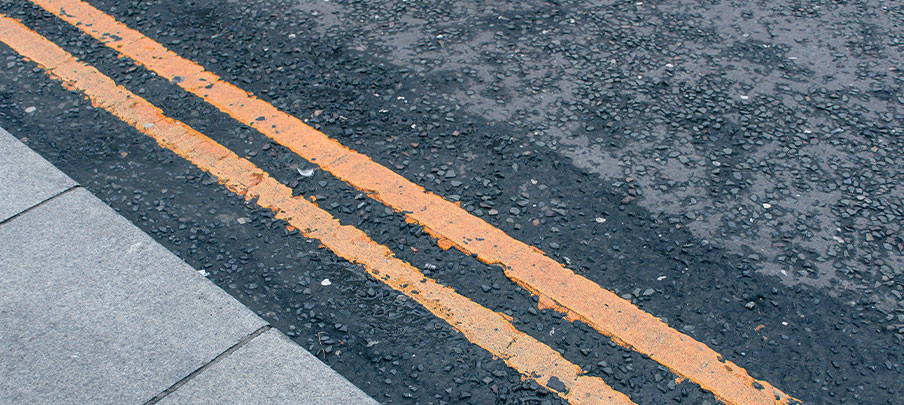
Thermoplastic paint has become a go-to material for road markings, and for good reason. It’s tough, bright, and holds up better than regular paint, especially on roads that take a beating every day. But like any material, it has its quirks and isn’t perfect for every situation. Let’s break down the basics of thermoplastic paint, including how it’s used, what it’s made of, and where it works best.
Thermoplastic paint is a solid powder that gets melted and applied to roads while hot, usually at around 200°C (about 392°F). Once it cools, it hardens into a thick, durable line that’s easy to see and hard to wear down.
It’s not really a “paint” in the traditional sense. It’s more like a molten plastic coating that bonds to the surface, kind of like a tough shell.
Here’s a look at the core ingredients:
Synthetic resin
This acts as the binder. It holds everything together and sticks the material to the road.
Glass beads
Tiny reflective spheres that help headlights bounce back at night.
Pigments
Usually white or yellow, depending on the marking.
Fillers
Add some bulk and texture to the paint for strength and grip.
There are a few different methods, depending on the job size and what the markings are for:
Screed
A flat blade spreads the hot paint evenly across the road.
Extrusion
The material is squeezed through a shaped nozzle to form solid lines or symbols.
Spraying
Used for more detailed markings or thinner applications.
Each method has its pros and cons. Spraying is faster, but not as thick. Screed gives better coverage but takes more time.
Let’s be real: it’s not always the cheapest option upfront, and it needs the right equipment. But for the right job, it’s worth the effort. Here’s why:
It lasts a long time.
Most thermoplastic markings can last 3–5 years, sometimes more. That’s a lot longer than regular road paint, which often fades after one or two seasons.
It sets fast.
Since it hardens as it cools, you don’t need to close off roads for hours. That’s a big plus for busy areas.
It’s reflective.
Those embedded glass beads help drivers see markings in the dark or rain—huge for safety.
It adds traction.
When mixed with anti-skid material, it helps tires grip better, especially on pedestrian crossings and sharp turns.
It’s low maintenance.
Fewer touch-ups mean fewer costs and disruptions over time.
That said, it's not perfect. In colder climates, it can be tricky to apply. And without proper surface prep, it might peel or chip.
You’ll often find thermoplastic markings in places like:
For lane lines, arrows, and other traffic indicators.
School zones and crossings
Where visibility and traction are especially important.
Parking lots
For organizing space and creating directional signs.
Factories and warehouses
For floor markings that stand up to foot traffic and machinery.
Before using thermoplastic paint, here are a couple of things worth noting:
You’ll need the right equipment.
Applying it isn't like using a paintbrush. Specialized machines are essential.
Surface prep is key.
The road needs to be clean and dry. Sometimes a primer is required for older or concrete surfaces.
Temperature matters.
Cold weather can mess with the application. If it’s too chilly, the material may not bond well.
Thermoplastic paint isn’t flashy, but it gets the job done, especially when durability and visibility are non-negotiable. It might cost more at the start, but the long-term payoff often makes it a smart choice. Whether you're maintaining a highway or re-striping a warehouse, it's worth looking into. Just make sure you're working with people who know what they're doing. The right material, applied the right way, makes all the difference.
If you need durable, road-tested thermoplastic paint for your next marking project, CPME Industrial Sales Corporation is here to help. We provide dependable materials and practical solutions for a wide range of applications—from highways to warehouse floors. Whether you're after clear lines, better grip, or long-term performance, CPME can help you get it done right. Reach out to us to learn more.